Parameter Estimation with Physics-Informed Neural Networks for ODEs
Consider the lotka volterra system
with Physics-Informed Neural Networks. Now we would consider the case where we want to optimize the parameters $\alpha$, $\beta$, $\gamma$ and $\delta$.
We start by defining the problem:
using ModelingToolkit, NeuralPDE, SciMLBase, OrdinaryDiffEq, Lux, Random, OptimizationOptimJL, LineSearches, Plots
using Optim: LBFGS

function lv(u, p, t)
    u₁, u₂ = u
    α, β, γ, δ = p
    du₁ = α * u₁ - β * u₁ * u₂
    du₂ = δ * u₁ * u₂ - γ * u₂
    [du₁, du₂]
end

tspan = (0.0, 5.0)
u0 = [5.0, 5.0]
prob = ODEProblem(lv, u0, tspan, [1.0, 1.0, 1.0, 1.0])
ODEProblem with uType Vector{Float64} and tType Float64. In-place: false
Non-trivial mass matrix: false
timespan: (0.0, 5.0)
u0: 2-element Vector{Float64}:
5.0
5.0As we want to estimate the parameters as well, let's get some data.
true_p = [1.5, 1.0, 3.0, 1.0]
prob_data = remake(prob, p = true_p)
sol_data = solve(prob_data, Tsit5(), saveat = 0.01)
t_ = sol_data.t
u_ = reduce(hcat, sol_data.u)
2×501 Matrix{Float64}:
5.0 4.82567 4.65308 4.48283 4.31543 … 1.01959 1.03094 1.04248
5.0 5.09656 5.18597 5.26791 5.34212 0.397663 0.389887 0.382307Now, let's define a neural network for the PINN using Lux.jl.
rng = Random.default_rng()
Random.seed!(rng, 0)
n = 15
chain = Chain(Dense(1, n, σ), Dense(n, n, σ), Dense(n, n, σ), Dense(n, 2))
ps, st = Lux.setup(rng, chain) |> f64
((layer_1 = (weight = [-0.04929668828845024; -0.3266667425632477; … ; -1.3531280755996704; -0.2917589843273163;;], bias = [0.28568029403686523, -0.4209803342819214, -0.24613642692565918, -0.9429000616073608, -0.3618292808532715, 0.077278733253479, 0.9969245195388794, 0.7939795255661011, 0.45440757274627686, -0.4830443859100342, -0.6861011981964111, -0.3221019506454468, -0.5597391128540039, -0.15051674842834473, 0.9440881013870239]), layer_2 = (weight = [-0.08606009185314178 -0.2168799340724945 … -0.3507671356201172 0.07374405860900879; 0.24009406566619873 -0.23728196322917938 … 0.3494441509246826 -0.21207460761070251; … ; 0.3976286053657532 0.28444960713386536 … -0.32817623019218445 0.3963923156261444; -0.07926430553197861 0.35875919461250305 … -0.035931285470724106 -0.2851111590862274], bias = [-0.065037302672863, 0.18384626507759094, 0.17181798815727234, -0.17310386896133423, 0.06428726017475128, 0.09600061178207397, -0.08703552931547165, 0.06890828162431717, -0.16194558143615723, -0.14649711549282074, -0.14649459719657898, -0.04401325806975365, -0.015492657199501991, 0.1046019047498703, 0.15015578269958496]), layer_3 = (weight = [-0.2995997667312622 0.1492127627134323 … -0.011808237992227077 -0.3409591317176819; 0.4351722300052643 0.1286778748035431 … -0.20781199634075165 -0.030425487086176872; … ; -0.02206072397530079 0.1434853971004486 … -0.05763476714491844 -0.2672235369682312; 0.2975636124610901 -0.06781639903783798 … 0.4012162387371063 0.1212344542145729], bias = [0.04135546088218689, -0.2398381233215332, 0.1595604568719864, 0.08355490118265152, -0.06149742379784584, -0.06998120248317719, -0.008059235289692879, -0.10936713218688965, -0.18340998888015747, 0.06297893822193146, 0.04081515222787857, -0.04258332401514053, 0.11171907186508179, -0.21218737959861755, 0.07965957373380661]), layer_4 = (weight = [0.3909372091293335 -0.23473051190376282 … 0.07385867834091187 0.31727132201194763; -0.04396386072039604 0.1817844808101654 … -0.26729491353034973 0.24492914974689484], bias = [0.04966225475072861, -0.04299044609069824])), (layer_1 = NamedTuple(), layer_2 = NamedTuple(), layer_3 = NamedTuple(), layer_4 = NamedTuple()))Next we define an additional loss term to in the total loss which measures how the neural network's predictions is fitting the data.
additional_loss(phi, θ) = sum(abs2, phi(t_, θ) .- u_) / size(u_, 2)additional_loss (generic function with 1 method)Next we define the optimizer and NNODE which is then plugged into the solve call.
opt = LBFGS(linesearch = BackTracking())
alg = NNODE(chain, opt, ps; strategy = WeightedIntervalTraining([0.7, 0.2, 0.1], 500),
    param_estim = true, additional_loss)
NNODE{Lux.Chain{@NamedTuple{layer_1::Lux.Dense{typeof(NNlib.σ), Int64, Int64, Nothing, Nothing, Static.True}, layer_2::Lux.Dense{typeof(NNlib.σ), Int64, Int64, Nothing, Nothing, Static.True}, layer_3::Lux.Dense{typeof(NNlib.σ), Int64, Int64, Nothing, Nothing, Static.True}, layer_4::Lux.Dense{typeof(identity), Int64, Int64, Nothing, Nothing, Static.True}}, Nothing}, Optim.LBFGS{Nothing, LineSearches.InitialStatic{Float64}, LineSearches.BackTracking{Float64, Int64}, Returns{Nothing}}, @NamedTuple{layer_1::@NamedTuple{weight::Matrix{Float64}, bias::Vector{Float64}}, layer_2::@NamedTuple{weight::Matrix{Float64}, bias::Vector{Float64}}, layer_3::@NamedTuple{weight::Matrix{Float64}, bias::Vector{Float64}}, layer_4::@NamedTuple{weight::Matrix{Float64}, bias::Vector{Float64}}}, Bool, WeightedIntervalTraining{Float64}, Bool, typeof(Main.additional_loss), Vector{Any}, Base.Pairs{Symbol, Union{}, Nothing, @NamedTuple{}}}(Lux.Chain{@NamedTuple{layer_1::Lux.Dense{typeof(NNlib.σ), Int64, Int64, Nothing, Nothing, Static.True}, layer_2::Lux.Dense{typeof(NNlib.σ), Int64, Int64, Nothing, Nothing, Static.True}, layer_3::Lux.Dense{typeof(NNlib.σ), Int64, Int64, Nothing, Nothing, Static.True}, layer_4::Lux.Dense{typeof(identity), Int64, Int64, Nothing, Nothing, Static.True}}, Nothing}((layer_1 = Dense(1 => 15, σ), layer_2 = Dense(15 => 15, σ), layer_3 = Dense(15 => 15, σ), layer_4 = Dense(15 => 2)), nothing), Optim.LBFGS{Nothing, LineSearches.InitialStatic{Float64}, LineSearches.BackTracking{Float64, Int64}, Returns{Nothing}}(10, LineSearches.InitialStatic{Float64}(1.0, false), LineSearches.BackTracking{Float64, Int64}(0.0001, 0.5, 0.1, 1000, 3, Inf, nothing), nothing, Returns{Nothing}(nothing), Optim.Flat(), true), (layer_1 = (weight = [-0.04929668828845024; -0.3266667425632477; … ; -1.3531280755996704; -0.2917589843273163;;], bias = [0.28568029403686523, -0.4209803342819214, -0.24613642692565918, -0.9429000616073608, -0.3618292808532715, 0.077278733253479, 0.9969245195388794, 0.7939795255661011, 0.45440757274627686, -0.4830443859100342, -0.6861011981964111, -0.3221019506454468, -0.5597391128540039, -0.15051674842834473, 0.9440881013870239]), layer_2 = (weight = [-0.08606009185314178 -0.2168799340724945 … -0.3507671356201172 0.07374405860900879; 0.24009406566619873 -0.23728196322917938 … 0.3494441509246826 -0.21207460761070251; … ; 0.3976286053657532 0.28444960713386536 … -0.32817623019218445 0.3963923156261444; -0.07926430553197861 0.35875919461250305 … -0.035931285470724106 -0.2851111590862274], bias = [-0.065037302672863, 0.18384626507759094, 0.17181798815727234, -0.17310386896133423, 0.06428726017475128, 0.09600061178207397, -0.08703552931547165, 0.06890828162431717, -0.16194558143615723, -0.14649711549282074, -0.14649459719657898, -0.04401325806975365, -0.015492657199501991, 0.1046019047498703, 0.15015578269958496]), layer_3 = (weight = [-0.2995997667312622 0.1492127627134323 … -0.011808237992227077 -0.3409591317176819; 0.4351722300052643 0.1286778748035431 … -0.20781199634075165 -0.030425487086176872; … ; -0.02206072397530079 0.1434853971004486 … -0.05763476714491844 -0.2672235369682312; 0.2975636124610901 -0.06781639903783798 … 0.4012162387371063 0.1212344542145729], bias = [0.04135546088218689, -0.2398381233215332, 0.1595604568719864, 0.08355490118265152, -0.06149742379784584, -0.06998120248317719, -0.008059235289692879, -0.10936713218688965, -0.18340998888015747, 0.06297893822193146, 0.04081515222787857, -0.04258332401514053, 0.11171907186508179, -0.21218737959861755, 0.07965957373380661]), layer_4 = (weight = [0.3909372091293335 -0.23473051190376282 … 0.07385867834091187 0.31727132201194763; -0.04396386072039604 0.1817844808101654 … -0.26729491353034973 0.24492914974689484], bias = [0.04966225475072861, -0.04299044609069824])), false, true, false, WeightedIntervalTraining{Float64}([0.7, 0.2, 0.1], 500), true, Main.additional_loss, Any[], false, Base.Pairs{Symbol, Union{}, Nothing, @NamedTuple{}}())Now we have all the pieces to solve the optimization problem.
sol = solve(prob, alg, verbose = true, abstol = 1e-8, maxiters = 5000, saveat = t_)Test PassedLet's plot the predictions from the PINN and compare it to the data.
plot(sol, labels = ["u1_pinn" "u2_pinn"])
plot!(sol_data, labels = ["u1_data" "u2_data"])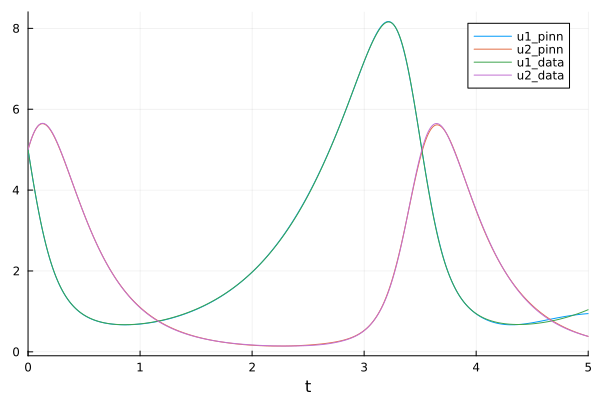
We can see it is a good fit! Now let's see if we have the parameters of the equation also estimated correctly or not.
sol.k.u.p4-element view(::Vector{Float64}, 543:546) with eltype Float64:
1.509514818640002
1.0050470753721696
2.9729977876995033
0.9894956024881104We can see it is indeed close to the true values [1.5, 1.0, 3.0, 1.0].